
Call us now :08071778813
 Send Inquiry

 Send Inquiry
Screw Pumps - Efficient Fluid Transfer For Viscous And Non-viscous Applications
Price 15000.0 INR/ Piece
MOQ : 1 Piece
Screw Pumps - Efficient Fluid Transfer For Viscous And Non-viscous Applications Specification
- Theory
- Other
- Working Temperature
- 350 Celsius (oC)
- Head Size
- upto 80 bar
- Frequency
- 50 Hertz (HZ)
- Flow Rate
- 5-500 m3/hr
- Speed
- 3000 RPM
- Features
- Can handle fluids that do not have enough lubricating value and also very low or high viscous products.
- Inlet/Outlet
- 1"
- Mounting Type
- Flange, B3
- Material
- Al, CI, SS
- Structure
- Screw Pump
- Fuel Type
- Other
- Weight
- 280 Kilograms (kg)
- Usage
- Oil Well
- Application
- Cryogenic
- Seals Type
- Std., Mechanical
- Capacity
- 500 m3/hr
Screw Pumps - Efficient Fluid Transfer For Viscous And Non-viscous Applications Trade Information
- Minimum Order Quantity
- 1 Piece
- FOB Port
- Vadodara
- Payment Terms
- Cash in Advance (CID)
- Supply Ability
- 20 Pieces Per Day
- Delivery Time
- 2 Week
- Sample Policy
- Contact us for information regarding our sample policy
- Packaging Details
- Packed in box without the loss of damage or leakage issue. Keeping in mind about weather conditions also while exporting.
- Main Export Market(s)
- Asia, Middle East, Africa
- Main Domestic Market
- All India
About Screw Pumps - Efficient Fluid Transfer For Viscous And Non-viscous Applications
Simplicity of Design and Easy for Maintenance.Can handle fluids that do not have enough lubricating value and also very low or high viscous products.
Smooth, pulsation free flow with extremely low noise and vibration levels. High Efficiency, Reliability & Negligible maintenance.
Versatile Fluid Transfer Performance
Screw pumps are ideal for moving fluids of any viscosity, from thin cryogenic liquids to dense bitumen and molasses. With a flow rate capacity up to 500 m3/hr and the ability to withstand high temperatures, they serve various industries requiring reliable, robust material transfer. Their adaptability makes them suitable for loading fuel from railway wagons, tankers, ships, or barges, bulk product handling, and process applications involving additives, residues, and specialty chemicals.
Engineered for Demanding Industrial Use
Manufactured using Aluminum, Cast Iron, and Stainless Steel, these screw pumps deliver reliable operation under tough operating conditions, high pressure (up to 80 bar), and fluctuating viscosities. Their flange or B3 mountings and robust build ensure precision and durability. Mechanical seal options and multiple inlet/output sizes cater to diverse installation requirements, providing flexibility for both fixed and mobile pumping operations in industries across India.
Efficient Handling and Maintenance
These pumps are designed for straightforward maintenance, optimal energy usage, and continuous operation. The sturdy structure makes them suitable for long-distance and high-volume applications, while high-speed performance (3000 RPM) ensures time-efficient transfers. The pumps can be quickly serviced thanks to accessible internal parts and standardized mechanical seals, minimizing downtime for users.
FAQ's of Screw Pumps - Efficient Fluid Transfer For Viscous And Non-viscous Applications:
Q: How does a screw pump efficiently handle both viscous and non-viscous fluids?
A: Screw pumps utilize intermeshing screws that create sealed cavities, enabling continuous and non-pulsating fluid movement. This mechanism works efficiently for both low and high viscosity products, ensuring reliable transfer regardless of the fluid's lubricity or thickness.Q: What typical applications can these screw pumps be used for?
A: They are ideal for bulk cargo handling, loading/unloading fuel oil and chemicals from railway wagons, tank trucks, ships, and barges. Additionally, they are used for lubrication, circulation, cooling, long-distance viscous product pumping, and process applications involving bitumen, molasses, additives, residues, and more.Q: When should I consider using a screw pump over other pump types?
A: Screw pumps are best chosen when fluids lack sufficient lubricity, are highly viscous, or when a consistent, non-pulsating flow is critical. They excel in high temperature (up to 350C) and high-pressure (up to 80 bar) environments, and for applications requiring a wide capacity range (5-500 m3/hr).Q: Where are these screw pumps typically installed?
A: These pumps are commonly installed in industrial plants, petroleum facilities, chemical factories, and tank farms. They are used at loading docks for railway wagons, tankers, and marine vessels, as well as in long-distance pipelines and manufacturing processes involving various fluids.Q: What is the process for maintaining these screw pumps?
A: Maintenance involves regular inspection of screws and seals, ensuring cleanliness of the pump internals, and timely replacement of mechanical seals if worn. Due to their accessible design and modular construction, routine maintenance and part replacement can be carried out with minimal downtime.Q: How do these pumps benefit industrial operations?
A: They provide reliable and energy-efficient fluid transfer, minimize product losses with leak-proof construction, and are capable of handling a variety of fluids at different temperatures and viscosities. Their robust structure and flexible installation options enhance process safety and operational efficiency.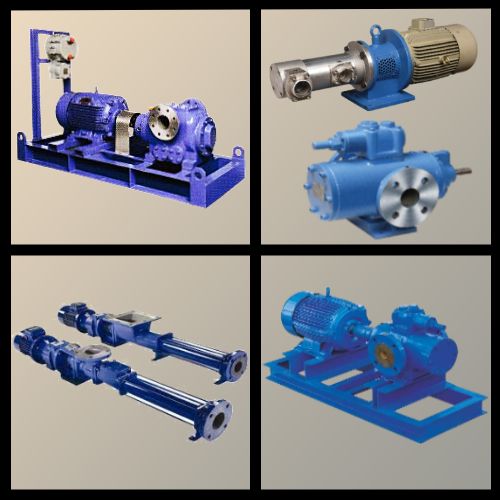
Tell us about your requirement

Price:
Quantity
Select Unit
- 50
- 100
- 200
- 250
- 500
- 1000+
Additional detail
Mobile number
Email

More Products in Screw Pump Category
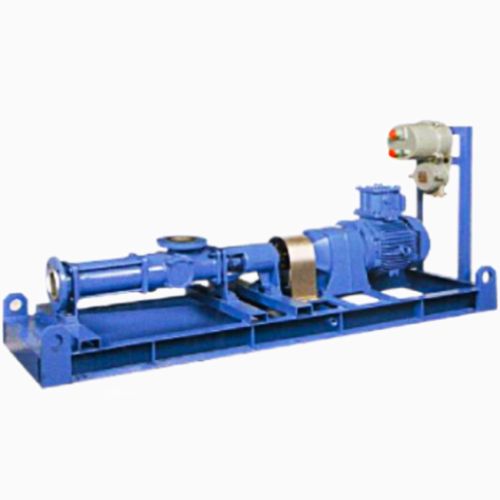
Single Screw Pump
Price 400000.00 INR / Piece
Minimum Order Quantity : 1 Piece
Material : CI, CS, SS
Fuel Type : Other
Product Type : Single Screw Pump
Usage : Industrial
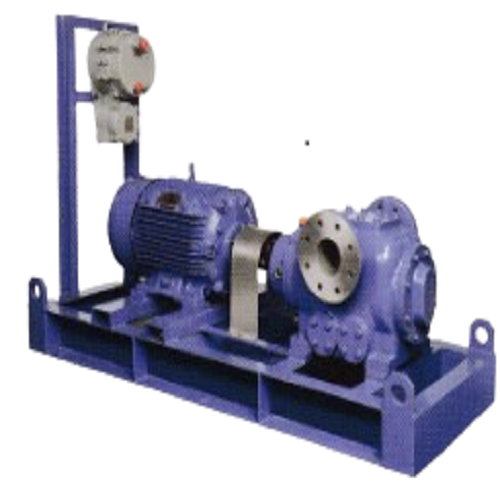
Twin Screw Pump
Price 400000 INR / Piece
Minimum Order Quantity : 1 Piece
Material : CI, CS, SS
Fuel Type : Other
Product Type : Twin Screw Pump
Usage : Other

Three Screw Pump
Price 80000 INR / Piece
Minimum Order Quantity : 1 Piece
Material : Stainless Steel
Fuel Type : Diesel
Product Type : Three Screw Pump
Usage : Industrial

"We are mainly dealing in Gujarat."
 Send Inquiry
Our Products
- Screw Pump
- Gear Pump
- Peristaltic Pumps
- Centrifugal Pumps
- Submersible Sewage Pumps
- Vacuum Pumps
- Fume Extraction Systems
- Dust Collectors
- Pneumatic Conveying System
- Air Classification System
- Dryers
- Particle Size Reducers
- Fire Fighting Pumps
- Positive Displacement Pumps
- Diaphragm Pump
- Dosing Pump
- Industrial Fans
- Filterpress
- Industrial Blowers
- Dust Collector
- Centrifugal Fans
- Syringe Pump
- Sanitizer Dispenser
- Barrel Pumps

33, Gandhi Oil Mill Industrial Estate, Near BIDC, Gorwa, Vadodara - 390016, Gujarat, India

Mr Mitesh Vipinchandra Ghadawala
(Proprietor)
Mobile :08071778813
 Send Inquiry
 Send SMS
 Call Me Free

Developed and Managed by Infocom Network Private Limited.
 English
 Spanish
 French
 German
 Italian
 Chinese (Simplified)
 Japanese
 Korean
 Arabic
 Portuguese
